Now Reading: Is Castor Oil Good for Skin? Uses, How to Apply, and Who Should Skip It
-
01
Is Castor Oil Good for Skin? Uses, How to Apply, and Who Should Skip It

Is castor oil good for the skin? It can be used as a skin conditioning agent, but whether or not a particular product is going to work for you is going to be down to your skin, the formula and where you apply it. It’s an optional cosmetic for intact skin rather than an established treatment for acne, eczema, scars or wrinkles.
A bottle of plain oil and a moisturiser which contains castor oil are two very different things. The moisturizer may well contain water, other conditioning agents and be formulated for a particular skin type. The presence of castor oil on an ingredients list in no way means that applying the plain oil will produce the same effect.

What can castor oil do for the skin?
Castor oil is listed on cosmetic labels as Ricinus Communis (Castor) Seed Oil. Its only really defensible use in skincare is as a conditioner to help skin feel softer or smoother as part of a good product.
The 2025 Cosmetic Ingredient Review safety reassessment says castor oil and similar ingredients can serve several roles, including skin conditioning. The panel found them safe for use in cosmetics at the concentrations they reviewed. This means they are safe in those specific uses and amounts, but not that every castor oil product will treat skin conditions or work for everyone.
The reassessment also considers reports of contact allergies. Even if an ingredient is generally safe, it can still cause a reaction in some people. The Cosmetic Ingredient Review, funded by the Personal Care Products Council (an industry group), conducted this review.
For regular dry skin, you don’t need to use plain oil. The AAD suggests fragrance-free moisturizers and recommends creams or ointments instead of lotions for dry skin. Apply your moisturizer right after washing, while your skin is still damp.
Keep the goal specific
‘My skin feels less rough’ is not the same as ‘my acne is improving.’ If you want softer, more comfortable skin, focus on that goal. Oily skin does not always mean inflammation is better, scars have changed, or the treatment is working.
Lab results for the oil itself and for finished medicated products do not show what plain oil will do on your skin. Stick with your prescribed treatment unless your doctor advises a change.
Castor oil versus a cream, ointment, or gel
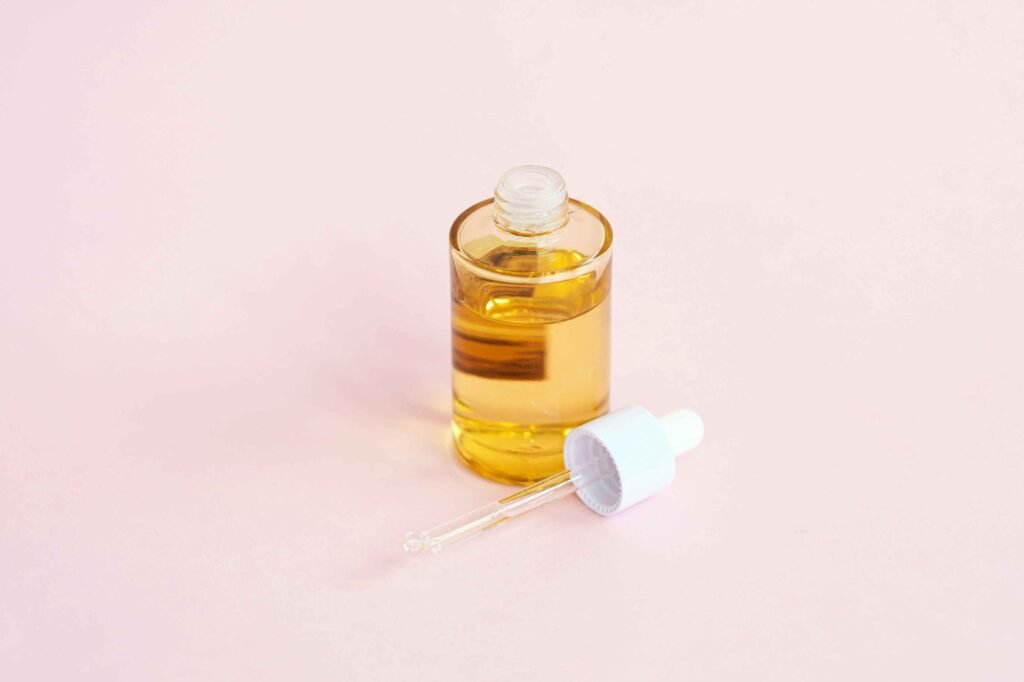
Castor oil is a thick, sticky liquid (NOAA chemical reference). This affects how it spreads, but it does not tell you if it will work for your skin.
Decide what type of product you need before comparing botanical names. The table shows general features and questions to help you choose, but it does not show results from real product testing.
| Product type | General texture | Useful selection question | Comedogenic-rating caution |
| Plain castor oil labeled for skin use | Thick liquid oil; the amount affects the coating left behind | Do you actually want an oil layer on this area? | A numerical ingredient score cannot guarantee how your skin will respond |
| Moisturizing cream | Thicker than a typical lotion or gel | Is it fragrance-free and formulated for your skin type? | Consider the finished formula rather than scoring one ingredient |
| Ointment | Usually the thickest option in this comparison | Does persistent dryness call for a richer moisturizer? | Texture alone does not establish whether it will cause breakouts |
| Moisturizing gel | Often water-based and lighter-feeling | Would a lighter formula be easier to use consistently? | For oily or acne-prone skin, look for appropriate finished-product labeling |
The cream, ointment, and gel descriptions are based on the AAD’s moisturizer guide. Each product is different, so how your skin reacts to it matters most.
If you’re also looking at a traditional plant oil, then our guide to mustard oil for the skin looks at another oil that’s commonly used and the caveats associated with it. Switching to a different oil still means you need to check the product and your own tolerance again.
Does castor oil clog pores?
Don’t treat an internet comedogenic score as a personal prediction at all. Comedogenicity is just a measure of the potential to cause comedones (blackheads and whiteheads). A comedogenicity rating for a raw ingredient tells you nothing about the finished moisturizer that contains it.
In a small human study of finished cosmetic products, it was found that products containing ingredients which are considered comedogenic weren’t necessarily comedogenic themselves. It was a study of six people, testing on the upper back. It wasn’t a study at all to prove that plain castor oil is suitable for acne prone faces.
For oily skin the AAD recommend oil free and non-comedogenic products. A moisturizer selected for acne prone skin is a better starting point than just going for a plain oil as it will have been assigned a low number on the chart. If you start a new product and your breakouts get worse, then stop using it. If the acne doesn’t clear up, then you should seek advice.
How to try castor oil on skin
If you’re still keen to have a go, pick a product that’s specifically indicated for topical use and stick to that product’s instructions. The steps below are a very cautious introduction, not a validated castor oil treatment protocol at all.
1. Read the entire label
Check what’s in the bottle (plain castor oil, a fragranced blend, anything else), what it’s intended for, any warnings and storage instructions. A hair product isn’t necessarily a facial product, and a bottle intended for one purpose is not necessarily suitable for another.
“Natural”, “organic” and “cold pressed” don’t tell you whether the finished product is going to irritate your skin. Don’t go adding essential oils or a number of other new ingredients to your very first trial; a simple product is much easier to work with in terms of trying to work out what you’ve actually used.
As one product-specific example, NOW’s castor-oil label directs users to massage a few drops onto the desired area and warns against application to broken or irritated skin and direct eye contact. Those are the manufacturer’s instructions, not a universal amount for every bottle or body area.
2. Test a small area first
The AAD’s own product testing instructions state that you should apply the normal amount to a quarter-size area (e.g. the underside of the arm or the bend of the elbow) twice a day for 7-10 days and leave it on for the product’s intended contact time.
If you develop any itching, swelling, or rash, then simply wash it off and stop using it. Don’t deliberately carry on with the trial to see whether your skin ‘gets used to it’.
A home use test is very different to medical patch testing for contact allergy. You cannot assume that simply passing a home use test means the product will not cause a reaction or that it won’t make your facial breakouts worse. A dermatologist can of course arrange the appropriate testing if the problem recurs or the cause is not clear.
3. Introduce it on one small, intact area
After an uneventful test, simply follow the label on a small area rather than going right in and covering your whole face or body. Use clean hands and a sufficient amount of product to apply a thin layer; no need to rub it in repeatedly. If it feels rather uncomfortably sticky then that’s a practical reason to go with a different texture.
Keep the rest of your routine as normal so you can properly assess the new product. You don’t need to blend it into your moisturizer bottle or go to the trouble of making up a cream. If your current moisturizer is already keeping the area comfortable, then there’s probably no real need to add oil.
4. Reassess before making it a habit
Look for a useful change in comfort or skin feel, together with any irritation or breakouts. More oil and longer contact aren’t necessarily better. Always follow the product instructions rather than assume that you have to leave it on overnight.
Keep it away from the eyes and don’t use a general skin oil as an eye drop, an eyelid treatment or a lash line treatment. If you have dry, painful, or persistently irritated skin, then get advice as to the cause rather than just keep changing oils.
Who should skip it or get advice from first?
| Situation | More useful next step |
| A previous reaction to castor oil or a related cosmetic ingredient | Avoid another trial and discuss the ingredient history with a clinician |
| Broken, raw, irritated, or actively inflamed skin | Follow appropriate skin-care or treatment advice; do not apply this as a home remedy |
| Oily or acne-prone facial skin | Start with an appropriate noncomedogenic moisturizer rather than a full-face oil layer |
| Persistent itch, painful cracking, or a recurring rash | Seek an assessment, especially if ordinary moisturizers are not helping |
| Use around the eyes or on an infant’s skin | Obtain advice specific to the area and person instead of extrapolating from an adult body-oil label |
Stop if the product burns, causes a rash, or makes the skin any less comfortable. Get medical advice if you have a severe reaction. If symptoms persist, then it’s worth seeking advice even if the product is one that’s marketed as being gentle or suitable for sensitive skin.
Frequently asked questions
Can you put castor oil on your face every day?
Daily use is by no means a requirement, and this article doesn’t in any way establish a daily facial use regime. You’d follow a product for that area and assess tolerance first. If you’re acne-prone or you’re already on a regime that works, then a stand alone facial oil is likely to be of very little benefit.
Should you dilute castor oil?
Castor oil is not an essential oil, so the essential oil dilution charts don’t apply to it. You’ll need to follow the label on the finished product. If you mix it with another oil, the texture and the actual ingredients you’re testing will be different, and that won’t in any way guarantee that a reaction will be avoided.
Will it remove dark spots, scars and wrinkles?
The cosmetic safety assessment referenced here does not establish those treatment benefits. You cannot assume that a surface that feels softer is any different in terms of pigmentation or scar tissue. If you have a persistent mark and it’s something you’re looking to treat, then you should see a dermatologist about appropriate options for your diagnosis and your skin type.
Is a castor oil moisturizer the same as pure castor oil?
No. The amount of castor oil, the other ingredients, and the overall formulation will all have an effect on how it spreads and how it performs. A product which contains hydrogenated castor oil or a castor oil derivative is no more to be judged as a bottle of plain seed oil.
Can you use the same oil on your hair?
Only if the product label allows for that use; skin comfort and hair conditioning are two different things, and neither of those in any way leads to hair regrowth. Our comparison of the various natural hair oils makes that distinction very clear and lays out the practical differences between them.
Can you swallow it for better skin?
Don’t turn a topical skincare experiment into an oral one. This article is solely about topical cosmetic use, and a skin product label in no way authorizes ingestion. Always seek the advice of an appropriate health professional before considering any internal use.
If you do try a topical, then note its full name, ingredients, site of application, and any reaction. A product that is comfortable, easy to use, and does what it says it does is far more useful than one that just adds an extra step on because an oil is “in”.
Sources
- Fiume et al., 2025: Re-Review Summary of Castor Seed Oil and Ricinoleates as Used in Cosmetics — cosmetic functions, safety-assessment scope, and reported contact allergy; industry-supported assessment.
- AAD: Dermatologists’ Tips for Relieving Dry Skin — fragrance-free moisturizing creams/ointments and application to damp skin.
- AAD: How to Pick the Right Moisturizer — gel, cream, and ointment texture and skin-type considerations.
- AAD: How to Control Oily Skin — oil-free and noncomedogenic product selection.
- AAD: How to Test Skin Care Products — small-area home testing and response to reactions.
- Draelos and DiNardo, 2006: A Re-evaluation of the Comedogenicity Concept — original study abstract; ingredient scores do not necessarily describe finished-product behavior.
- NOW: Castor Oil — one manufacturer’s topical directions and cautions, not independent efficacy evidence or a product endorsement.
- NOAA CAMEO Chemicals: Castor Oil — physical description as a viscous liquid only.

Jen Sheldon is a seasoned writer with a passion for fitness, health, wellness, and addiction treatment. With years of experience crafting insightful and research-backed content, she helps readers navigate their journey toward better well-being. When she’s not writing, you’ll find her exploring new workout routines or diving into the latest health trends.