Now Reading: Tricep Exercises with Dumbbells: 8 Moves for All Three Heads
-
01
Tricep Exercises with Dumbbells: 8 Moves for All Three Heads
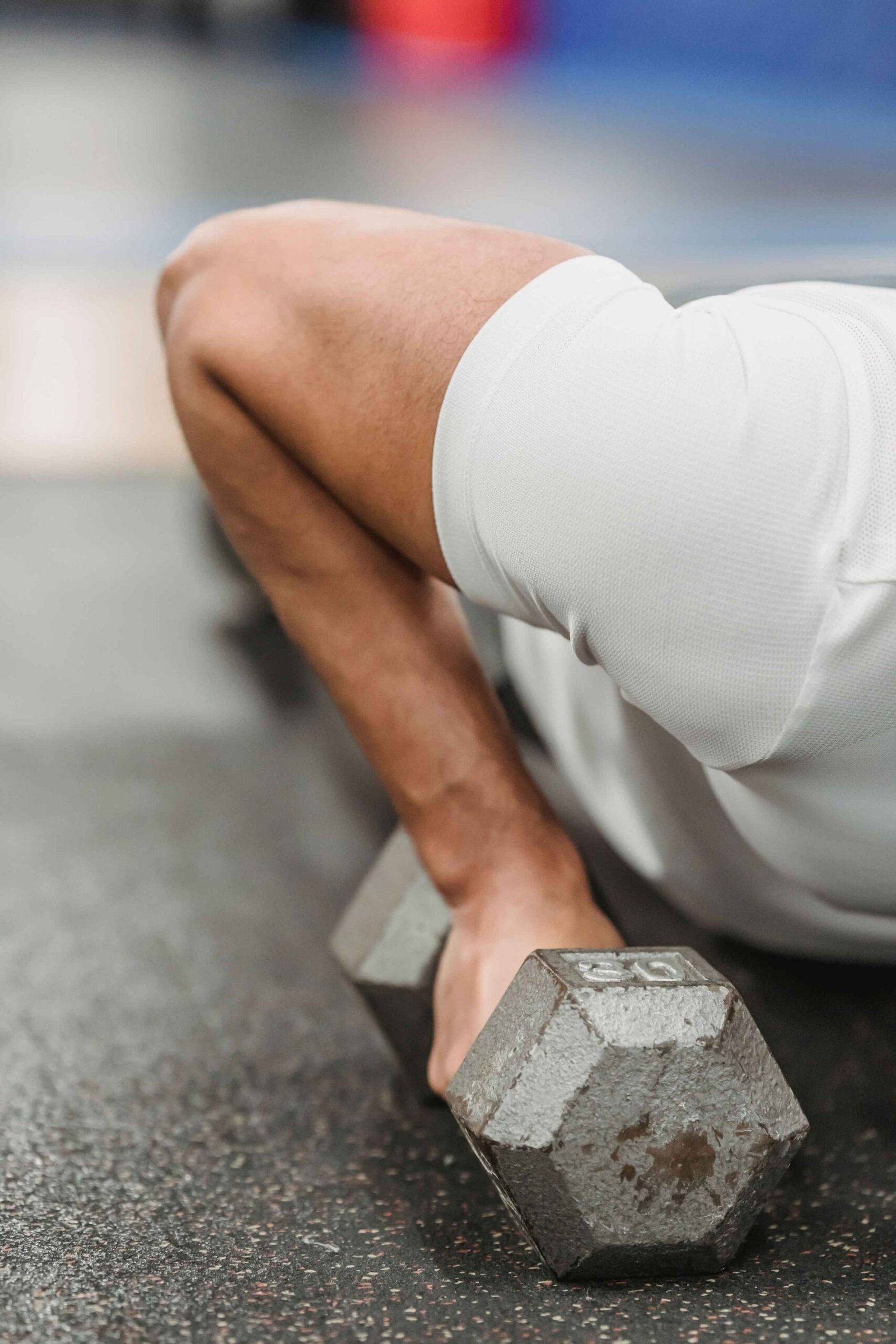
Some good tricep exercises with dumbbells are close-grip presses, lying extensions, overhead extensions, and kickbacks. Choose two or three exercises that you can do comfortably and have the equipment for. The eight exercises below are just options to pick from, not a routine to do all at once.
You don’t need to do a different exercise for each part of the triceps. For a short home workout, it’s more important to use weights you can handle, control your elbow movement, and give yourself enough time to recover between sessions. Many of the exercises below are similar, so just pick the one that fits you best.
How do you train all three heads of the triceps?
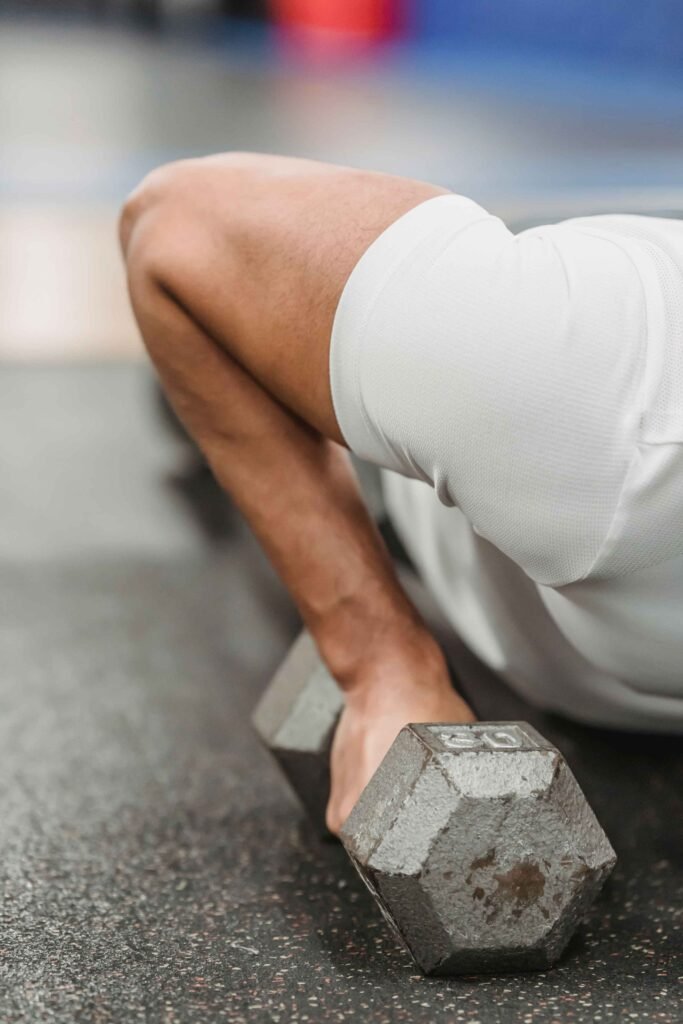
The triceps is at the back of the upper arm and is the prime extensor of the elbow. It has three heads (long, lateral, and medial) which all contribute to the extension of the elbow. The long head also crosses the shoulder joint, so its length is affected by the position of the upper arm.
The StatPearls anatomy review describes the long head attaching to the scapula and the other two heads attaching to the humerus. Their attachments to the elbow allow them to extend the forearm.
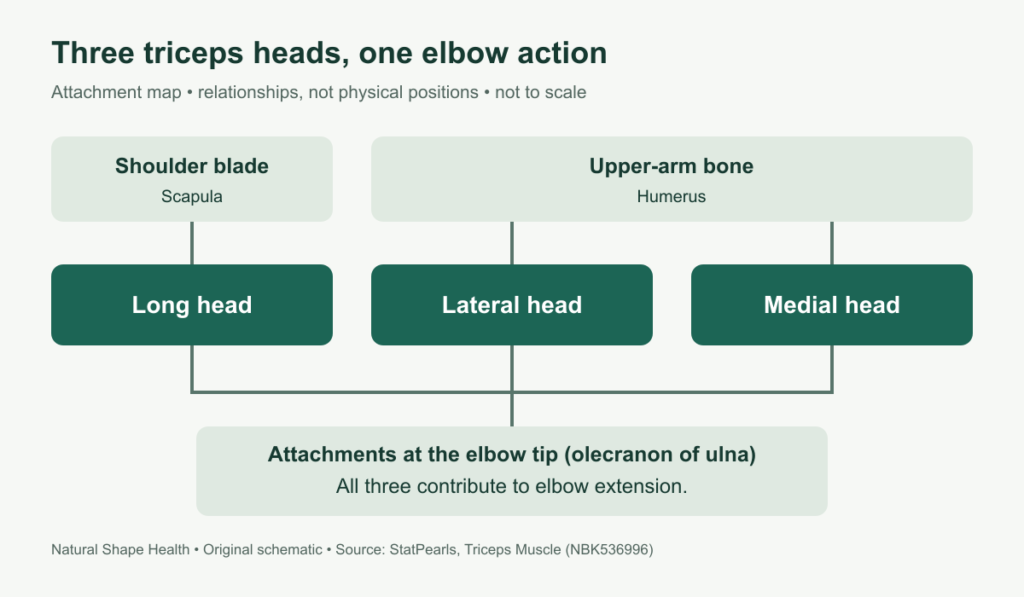
Simplified attachment map (not an anatomical drawing to scale). The boxes indicate the relationships rather than the actual positions of the heads.
Overhead extensions are a good choice if your shoulders feel comfortable in that position. In a 12-week study with 21 adults, cable elbow extensions led to more triceps growth when done overhead compared to by the side. However, that study used cables, not dumbbells, so it doesn’t rank the exercises on this list.
Let that study encourage you to try an overhead option, but don’t force it if it feels uncomfortable. You also don’t need to worry about calling a kickback ‘lateral head only’ or a certain grip ‘medial head only’.
Choose your tricep dumbbell exercises
| Exercise | Movement pattern | Equipment beyond dumbbells | Why choose this version? |
| Close-grip floor press | Press | Exercise mat, optional | Floor provides a clear lower stopping point |
| Close-grip bench press | Press | Stable flat exercise bench | Allows a different lowering range |
| Single-arm lying floor extension | Elbow extension, arm raised | Exercise mat, optional | One arm to control at a time |
| Two-dumbbell lying bench extension | Elbow extension, arms raised | Stable flat exercise bench | Both arms work together |
| Seated two-hand overhead extension | Overhead elbow extension | Stable seat | One suitable dumbbell held with both hands |
| Single-arm overhead extension | Overhead elbow extension | Stable seat, optional | Each arm uses its own manageable load |
| Supported single-arm kickback | Elbow extension, arm beside torso | None; support on your thigh | Simple light-weight option |
| Chest-supported kickback | Elbow extension, arm beside torso | Adjustable exercise bench | Bench supports the torso |
Presses also work your chest and shoulders. Extensions and kickbacks focus more on the elbow, but you still need to control your whole body. The weights you use for pressing might be too heavy for these other exercises.
If your workout also includes legs, back, and core, start with a full-body full-body dumbbell routine. Then decide if you want to add extra arm exercises.
Before your first set
Warm up with 5–10 minutes of walking or similar light activity, then rehearse your selected movements with very light weights. Mayo Clinic’s weight-training guidance emphasizes controlled technique, appropriate resistance, normal breathing, and recovery between sessions for the same muscles. Breathe out during the lifting effort and in as you lower the weight.
Make sure you have a clear floor space and a stable bench if you need one. Check your adjustable dumbbells and bench settings before you start. For the two-hand overhead exercise, use a dumbbell that’s easy to grip securely. Avoid using loose plates or selector mechanisms that are hard to hold.
Practice getting into and out of position before adding any weight. If it’s hard to do, try a lighter dumbbell or pick a different exercise. Stop if you feel pain, and get personal advice if you have ongoing elbow or shoulder problems or are training after an injury.
8 tricep exercises with dumbbells
1. Close-grip dumbbell floor press
Lie on your back with your knees bent and feet on the floor. Hold the dumbbells over your chest with your palms facing each other. Bend your elbows out (keeping them reasonably close to your sides) until your upper arms just touch the floor.
Press up without banging the dumbbells together. Keep your wrists above your forearms and your shoulders down. Lower with control, pausing at the floor rather than bouncing.
Useful cue: Let the floor stop the descent; keep your grip firm through the pause.
“Close grip” is a relatively tucked arm path. The dumbbells don’t have to touch, and you don’t need to be squeezing them together throughout the set.
2. Close-grip dumbbell bench press
Use a flat bench with your head, upper back, and hips all supported, and your feet firmly on the floor. Start with your palms facing in and the weights above your chest. Lower them down alongside your chest with your elbows close to your torso and then press up smoothly.
Stop the descent when you can maintain a comfortable shoulder position. The bench allows for more descent than the floor; that extra range is not something you need to achieve.
Useful cue: Keep wrists stacked over the forearms instead of letting them fold backward.
ACE’s dumbbell chest press instructions include a tucked elbow option for increased triceps emphasis. It’s still a chest and arm press rather than a triceps isolation exercise.
3. Single-arm lying floor extension
Lie on your back and hold one light dumbbell in your hand with your upper arm pointing towards the ceiling. Bend the elbow so the weight is approaching beside your head (keeping it well clear of your face), then straighten the elbow smoothly and lower again without any swinging of the upper arm.
Your free hand can just lightly steady the working upper arm. Do the planned reps, lower the weight under control, and then switch sides.
Useful cue: The forearm moves around the elbow; the upper arm stays relatively quiet.
Mayo Clinic’s triceps extension demonstration describes the movement and allows for either floor or bench support.
4. Two-dumbbell lying bench extension
Lie down on a flat bench with your feet supported. Hold a light dumbbell in each hand, palms facing in, arms pointing up. Bend the elbows to lower the weights down to either side of your head and then extend the elbows (don’t snap them straight).
Keep the weights well clear of your face and use a range that you can control. If one arm starts to drift or the weights become too much to manage together, then go back to the single-arm floor variation.
Useful cue: Finish each lowering phase before starting the next lift.
Choose the dual arm version rather than the single arm version if the setup is appropriate for you. You don’t need both in the same short session.
5. Seated two-hand overhead extension
Sit on a stable seat with feet planted. With a secure two-hand grip under one end of a suitable dumbbell, bring it overhead. Bend your elbows to lower the weight behind your head, then straighten them through a comfortable range.
Keep your torso upright and upper arms relatively steady. Allow a comfortable elbow spacing; do not force them tightly against your ears.
Useful cue: End the lowering phase before your ribs lift or your back arches to gain more movement.
PureGym’s overhead-extension guide explains the two-hand dumbbell grip and elbow action. The seated setup here is an alternative to standing. Use a different exercise if raising the weight overhead is uncomfortable.
6. Single-arm overhead extension
Hold one light dumbbell by the handle with the working arm overhead. Bend the elbow to lower the weight behind your head, then extend the arm fully without leaning back or to the side. Stay in a comfortable range of movement and keep the wrist very still.
Use the same manageable weight and repetition target on each side. That’s an alternative to sharing one dumbbell between both hands; it’s not a reason to lift the same weight with one arm.
Useful cue: Keep your trunk facing forward throughout the repetition.
You can sit if you prefer. If the overhead position is too difficult, then go for a lying extension or press instead.
7. Supported single-arm kickback
Stand in a staggered stance and hinge forward, resting your free hand on your forward thigh. Hold a light dumbbell in the other hand. Bring that upper arm up alongside your torso, elbow bent, forearm hanging down.
Straighten the elbow to move the DB backward, then slowly bend it to return. Keep the upper arm fixed rather than lifting the whole arm up on each repetition. Switch sides after the set.
Useful cue: Keep your chest still; move at the elbow.
ACE’s kickback guide stresses a steady torso and a stationary upper arm. If you have to swing, then reduce the weight.
8. Chest-supported dumbbell kickback
Set an adjustable bench to a comfortable incline and get yourself into position with your chest supported and your feet secure. Hold light dumbbells, bring your upper arms up beside your torso, and bend your elbows so that your forearms are hanging down.
Extend the elbows, then bring them back slowly. Keep your chest right against the pad. Set it up so the weights have room to move without hitting the bench.
Useful cue: Let the bench carry your torso while the forearms move.
This one changes the support rather than the basic elbow action. If your bench makes it impossible to achieve a comfortable arm path, then skip it. The single-arm version requires less equipment.
A short triceps workout with dumbbells
The following is an example of a starting routine for a generally healthy adult who can do these movements comfortably. Adjust it to your own experience and to the pressing you’re already doing in your program.
| Order | Exercise | Initial work | Rest |
| 1 | Close-grip floor press | 1 set of 10–12 controlled reps | 60–90 seconds, longer if needed |
| 2 | Seated two-hand overhead extension | 1 set of 10–12 controlled reps | 60–90 seconds, longer if needed |
| 3, optional | Supported single-arm kickback | 1 set of 12–15 reps per side | Rest between sides as needed |
If the overhead position isn’t for you, then go for the single-arm lying floor extension if you’ve already done a few sets of chest or shoulder pressing; then just do one extension option rather than the whole lot.
Start with weights that leave you with a few controlled reps. Once you’re comfortable with the setup and the movements and you’ve recovered well, you can look at a second set of the first two exercises. That’s an option for progression, not something you have to achieve by a certain point.
Our dumbbell shoulder exercises are overhead presses, which will of course also work the triceps. You’ll need to factor that in when working out how much extra arm work to throw in.
How often should you do it?
Place your direct triceps work on non-consecutive days as well (allowing for recovery from the chest and shoulder pressing). Two short weekly sessions may be all that you need, though you may in fact require less of this work if your existing routine already has a good amount of pressing.
A three day full body schedule is one way of separating out your strength sessions. A little bit of arm work can be added in within a workable schedule rather than having to create extra hard sessions on every rest day.
How do you pick the weight and the progress?
Choose a separate starting load for each movement. A dumbbell that you can press easily may well be one that’s very difficult to control in a kickback or single-arm extension.
Keep a simple log: exercise, weight, reps, and whether the last rep looked like the first. So if you do 10 controlled floor presses, then 11, and then 12 over subsequent sessions with the same weight, when the top end is consistently within reach, then go for the smallest possible increase and come back down to fewer reps within that range.
If the next dumbbell is a bit too big a jump, then just keep the same weight and work on consistency. Don’t make the exercise any harder by doing it at a faster rate, by throwing the weight, or by forcing a deeper position. The same applies to getting the weights in and out of the way; they should be done in a controlled manner.
Common questions
Do all eight exercises work different triceps heads?
No, they offer different arm positions, different supports, and different loading arrangements across the four movement patterns. A number of them are actually just alternatives to one another. You can have an overhead or lying extension as an alternative to a press, and that will give you some variety in your session without having to do eight separate exercises.
Can you train your triceps with one dumbbell?
Yes, a single dumbbell will do for one-arm lying extensions, one-arm overhead extensions, and supported kickbacks. A suitable dumbbell can also be used in both hands for the overhead extension. Use the weight that each exercise allows you to control rather than trying to use one heavy dumbbell for everything.
Should you lock your elbows at the top?
Just go through your comfortable range and keep them straight. Don’t snap them into the end position, don’t deliberately hyperextend them, or put a heavy weight on a joint position that you can’t control.
What if your elbows were hurting you during the extensions?
Stop the movement. More repetitions aren’t the answer to working through joint pain. A trainer can look at your technique and your equipment. A clinician or physio can look at the pain that persists, the symptoms that follow an injury, and the recurrent limitations.
For your next session, pick one press and one comfortable extension, note the weights, and keep the other variations on hand as alternatives. Repeatable, controlled sets will give you a much clearer basis for progress than changing the whole exercise list every week.
Sources
- StatPearls: Anatomy, Shoulder and Upper Limb, Triceps Muscle — head names, attachments, and elbow/shoulder function.
- Maeo et al.: Overhead versus neutral-arm elbow-extension training — original study’s PubMed abstract; 21 adults, 12 weeks, cable-based training. The full paper was not used for additional claims.
- Mayo Clinic: Weight Training—Do’s and Don’ts — general technique, warming up, breathing, pain, and recovery.
- Mayo Clinic: Triceps Extension with Dumbbell — lying extension technique, single-arm support, and floor/bench options.
- ACE: Chest Press — dumbbell pressing mechanics and tucked-elbow option.
- PureGym: Overhead Tricep Extensions — overhead dumbbell grip and elbow movement.
- ACE: Triceps Kickback — kickback setup, stationary upper arm, and torso control.

Jen Sheldon is a seasoned writer with a passion for fitness, health, wellness, and addiction treatment. With years of experience crafting insightful and research-backed content, she helps readers navigate their journey toward better well-being. When she’s not writing, you’ll find her exploring new workout routines or diving into the latest health trends.