Now Reading: Peppermint Oil for Hair: How to Dilute and Use It Safely
-
01
Peppermint Oil for Hair: How to Dilute and Use It Safely
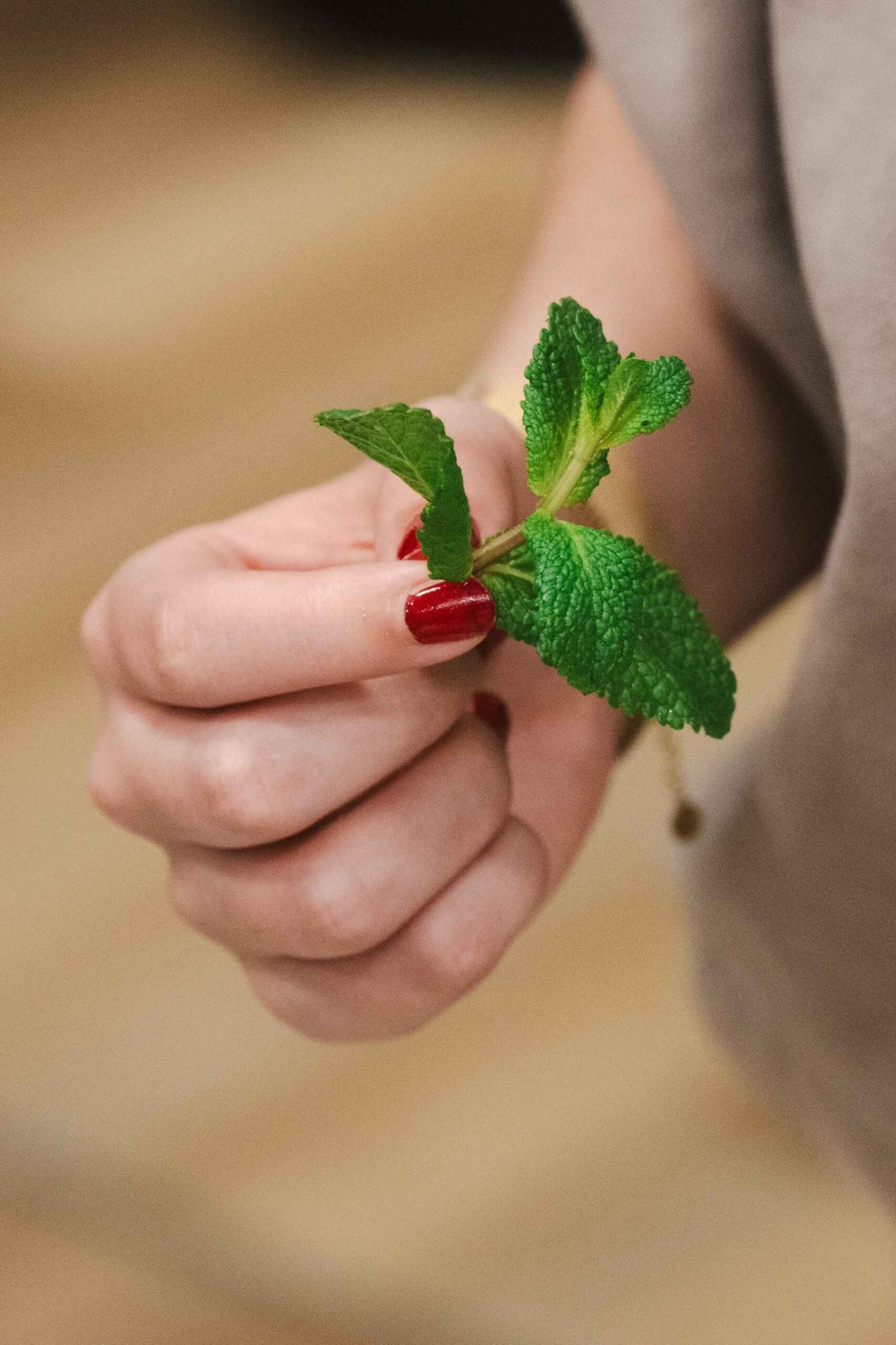
Use peppermint oil for hair only in a well-formulated product or dilute it according to trusted, product-specific instructions. Never apply concentrated essential oil directly. Diluting it lowers the strength, but your scalp may still react, and it may not help hair growth.
Before adding peppermint to your routine, check the label. Some scalp oils already contain peppermint in a carrier. A bottle labeled ‘100% peppermint essential oil’ is a concentrate and should be used differently than ready-to-use products.
Decide first if you want a conditioner, a minty scent, or help with hair thickness. These are separate goals, and feeling a cooling effect does not tell you which benefit you will get.
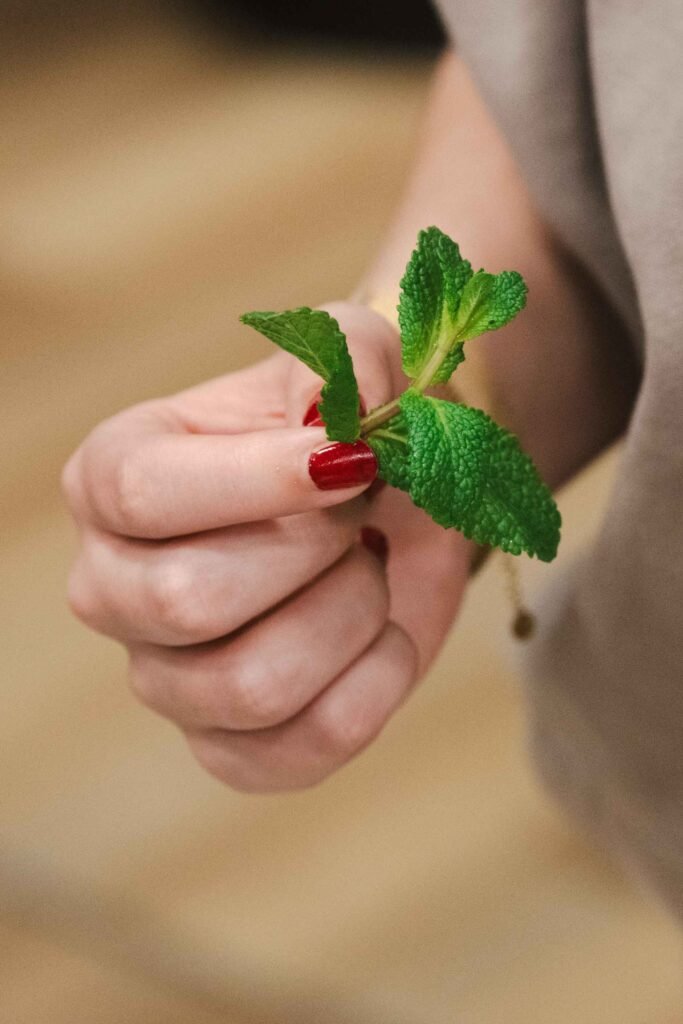
Does peppermint oil help hair grow?
The frequently cited 2014 peppermint-oil experiment studied mice. Researchers compared several topical applications over four weeks, including peppermint oil, and reported hair-growth findings in that animal model.
That study does not show what concentration, application method, or regrowth time works for people. You cannot use its results as a recipe just because someone left out the word ‘mice’ on social media.
Menthol contributes to peppermint’s cooling feel, but sensation is not a measurement of new hair growth. NCCIH’s peppermint-oil overview also notes that topical peppermint oil can cause skin irritation and rashes.
For a full comparison of cosmetic uses and hair growth evidence, check our guide to natural hair oils. Improving how your hair looks is not the same as changing how your follicles make hair.
Essential oil, carrier oil, and finished scalp oil
| Product | What it means | What to check before use |
| Peppermint essential oil | Concentrated aromatic oil from the peppermint plant | Whether the supplier gives instructions for the intended cosmetic use |
| Carrier oil | An oil used as the larger part of an oil-based blend | Ingredients, personal tolerance, and suitability for the intended use |
| Ready-to-use scalp oil or serum | A finished formula that may contain peppermint and other ingredients | Application area, amount, contact time, rinse-out directions, and warnings |
| Peppermint shampoo | A formulated cleansing product | Use as labeled; do not assume its directions apply to a leave-on oil |
A product being ‘natural’ in no way implies that it’s going to be suitable for your scalp. Fragrance, other essential oils, preservatives and indeed the carrier itself can all have an impact on the experience.
If your product already has peppermint, do not add more essential oil to make it ‘stronger.’ Changing the concentration without knowing the original amount or the effects of the new mix can be risky.
How to understand a dilution percentage
The Tisserand Institute describes dilution as a concentration in the complete mixture. Work consistently by weight or by volume (never mix grams of one ingredient with millilitres of another and assume the % is the same).
For a blend calculated by volume:
Essential oil volume = final blend volume × target percentage ÷ 100.
Carrier oil volume = final blend volume − essential oil volume.
For instance a 20ml final mix at 0.5% will contain 0.10ml of essential oil and 19.90ml of carrier oil. Adding 0.10ml of essential oil to a 20ml full of carrier will give you a slightly different final volume and concentration.
Dilution calculation chart
The chart shows the arithmetic for two example concentrations. Neither percentage is presented as a validated peppermint hair-growth dose, a universal scalp recommendation, or a guarantee of safety. Choose a concentration only when appropriate instructions for your product and circumstances support it.
| Final blend volume | Example concentration by volume | Peppermint essential oil | Carrier oil |
| 10 ml | 0.5% | 0.05 ml | 9.95 ml |
| 20 ml | 0.5% | 0.10 ml | 19.90 ml |
| 30 ml | 0.5% | 0.15 ml | 29.85 ml |
| 10 ml | 1% | 0.10 ml | 9.90 ml |
| 20 ml | 1% | 0.20 ml | 19.80 ml |
| 30 ml | 1% | 0.30 ml | 29.70 ml |
These are tiny quantities. A kitchen teaspoon is not going to give you an accurate measure of the essential oil volumes listed here. You need to use equipment which will give you an accurate measure of those oil volumes or else just go for a ready-made product rather than trying to work it out yourself.
Drop counts are approximate as the drop size will vary with the oil, the bottle opening and the dispenser. A chart that simply says ‘two drops’ without stating the assumptions behind it is not an exact concentration calculation.
If you are preparing an oil-only blend
First check that the supplier actually provides directions in support of the intended topical use. If you have a history of reactions or an existing scalp problem then get advice from a dermatologist as to whether it’s suitable before you go any further.
Use a plain carrier you’re already familiar with, clean measuring equipment and a clean suitable container with a secure lid. Measure your essential oil and your carrier separately according to the supported target concentration, combine them and mix well.
Label the container with all the ingredients, the calculated concentration and the date of preparation. Store in accordance with the instructions for the individual ingredients, away from children. A homemade mix has no tested shelf life simply because it contains no water.
Don’t add peppermint oil to a water spray and call it diluted. A mixture of oil and water doesn’t just become a uniform cosmetic formula upon shaking. If you add it to shampoo, aloe gel or some other finished product you’re creating a different formulation altogether rather than a simple oil-in-water carrier.
For context on a richer carrier’s cosmetic use, our avocado oil hair-care guide discusses conditioning existing strands. Choosing a particular carrier does not prove that the peppermint blend will stimulate follicles.
Introduce a finished product cautiously
Read the instructions first. A rinse-out treatment and a leave-on serum will have different instructions; neither will contain a schedule for a DIY version.
The American Academy of Dermatology recommends small area testing of any new skin care product prior to wider use. Their general guidance is that you should do repeated testing over a period of 7-10 days, allowing for the product’s normal contact time. This in no way means that every DIY essential oil mix you can think of is suitable for testing and it does not in any way guarantee that you will tolerate it in the future.
For use on the scalp as per the label (i.e. the amount and method of application as stated on the label) and after checking tolerance. Keep away from the eyes and face, avoid use on broken or irritated skin and wash hands afterwards. Do not use a scalp product as an eyelash, eyebrow or facial product.
There’s no need to keep ramping up the amount until you get that strong tingle. Don’t add heat and don’t just leave it on overnight. Use the specified contact time. If the instructions don’t tell you how to use it, ask the manufacturer before you apply it.
When to stop and get help
Stop using the product if it causes any burning, rash or persistent irritation. Simply wash it off and if the reaction is severe or doesn’t go away then you should seek medical advice. Do not use a stronger mixture or another fragranced product to ‘overpower’ the first one.
If peppermint oil gets into an eye, begin rinsing immediately with comfortable-temperature running water. Poison Control’s peppermint-oil guidance specifies 15 minutes of rinsing. Contact a poison center or healthcare professional for advice about ongoing irritation, pain, or vision changes; do not put carrier oil into the eye.
If ingested accidentally, contact a poison centre for advice as to how to manage the exposure rather than using a hair care product. Get emergency help if there’s any difficulty with breathing or any other serious reaction. Keep the container of the product to hand so that the ingredients can be identified.
This is not a ‘children’s scalp blend’ recipe. NCCIH specifically warns against the application of peppermint oil to the faces of infants and young children. Always ask your healthcare professional before using any essential oil products on a child.
What to compare when buying a peppermint hair product
Look past the front label promise. The useful info is the full ingredient list, the area it’s intended for, whether it’s ready to use and the clear instructions as to how much to use and for how long.
| Question | Why it matters |
| Is this a concentrate or a finished product? | Determines whether dilution is required or already part of the formula |
| Is it designed for scalp use? | A fragrance or diffuser oil is not automatically a scalp product |
| Does it explain leave-on versus rinse-out use? | Avoids inventing an overnight or daily routine |
| Are other fragrances or essential oils included? | Helps identify ingredients you may already know you react to |
| Is the growth claim based on this exact product in people? | Ingredient publicity and mouse research do not establish finished-product performance |
You don’t need the strongest smelling bottle. A product with clear instructions is far easier to assess than one where you’re left guessing as to the concentration and exposure time.
Questions about peppermint oil for hair
Can I just apply the pure peppermint oil directly to my scalp?
Don’t use undiluted peppermint essential oil as a scalp treatment. Always follow the appropriate dilution guidelines or opt for a product that is ready to use. A carrier will reduce the concentration but won’t necessarily rule out the possibility of a reaction.
What carrier oil should I be using?
Choose on the basis of tolerance, the product instructions and the texture you’re after. A heavier carrier will be different from a more fluid one, but neither one is going to do anything to promote hair growth. If your overriding aim is softer lengths then you might well find that a plain conditioner would achieve that for you without the need for peppermint.
How often should I be using it?
Just follow the instructions on the finished product. The referenced animal study doesn’t actually provide a human usage schedule and this article doesn’t provide one for any of the homemade blends either. More frequent use is not in any way evidence of better results.
Does tingling mean it’s working?
It doesn’t promote hair growth at all. You can certainly feel a product without it having any effect on hair density. Burning or irritation are reasons to stop, not indications that you should keep using it until your scalp has ‘adjusted’.
Can I leave it on overnight?
Use the finished product only in the manner specified in the directions. Don’t assume that a homemade dilution is an overnight treatment. Longer exposure is a different way of using the product, even if the concentration remains the same.
When should I be getting advice about thinning hair?
If you’re noticing persistent thinning, patchy loss or some other oddity on the scalp then see a dermatologist rather than just waiting for an oil experiment to ‘prove’ itself. Knowing what the problem is gives you a sound basis on which to build your care regime.
Know what’s in the bottle, only measure when you have the right instructions and the right kit and judge the product on your actual objective. A mint sensation is obvious; you need more than that to know it’s going to be of any use.
This is general cosmetic information, not an individualised hair loss treatment plan and not a guarantee that any particular dilution will be suitable for your skin.
Sources
- Oh et al., 2014: Peppermint Oil Promotes Hair Growth without Toxic Signs — mouse experiment, not a human treatment protocol.
- NCCIH: Peppermint Oil — topical adverse effects and child-related cautions.
- Tisserand Institute: Dilution for Essential Oils — percentage definitions, consistent measurement basis, and approximate drop conversions.
- AAD: How to Test Skin-Care Products — general small-area product testing.
- Poison Control: Peppermint Oil—Is It Toxic? — exposure risks and eye-rinsing guidance.

Jen Sheldon is a seasoned writer with a passion for fitness, health, wellness, and addiction treatment. With years of experience crafting insightful and research-backed content, she helps readers navigate their journey toward better well-being. When she’s not writing, you’ll find her exploring new workout routines or diving into the latest health trends.