Now Reading: Dumbbell Shoulder Exercises: 10 Moves for Stronger Shoulders
-
01
Dumbbell Shoulder Exercises: 10 Moves for Stronger Shoulders
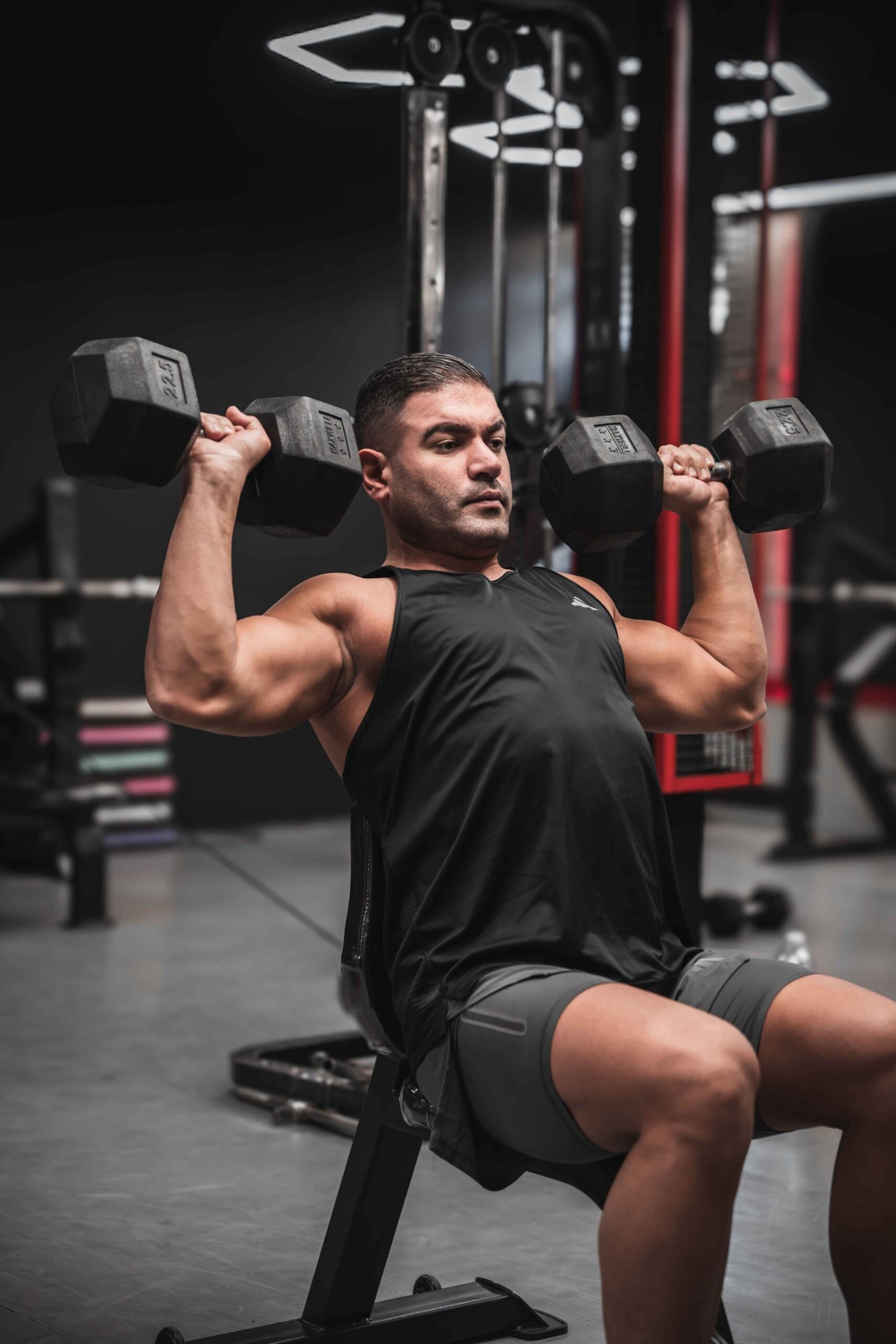
Some good dumbbell shoulder exercises include the shoulder press, lateral raise, and reverse fly. There are different ways to do each, so you can change your support, position, or use one or both arms. You don’t need to do all ten exercises in one session—these are just options to choose from.
Dumbbells that feel fine for overhead presses might be too heavy for lateral raises. Use lighter weights for raises and flyes instead of using the same pair for every exercise. Some variations need a bench, but many can be done standing.
This guide is for general strength training. If you have pain, are recovering from an injury, or have limited movement, get personal advice before using these exercises for rehab.
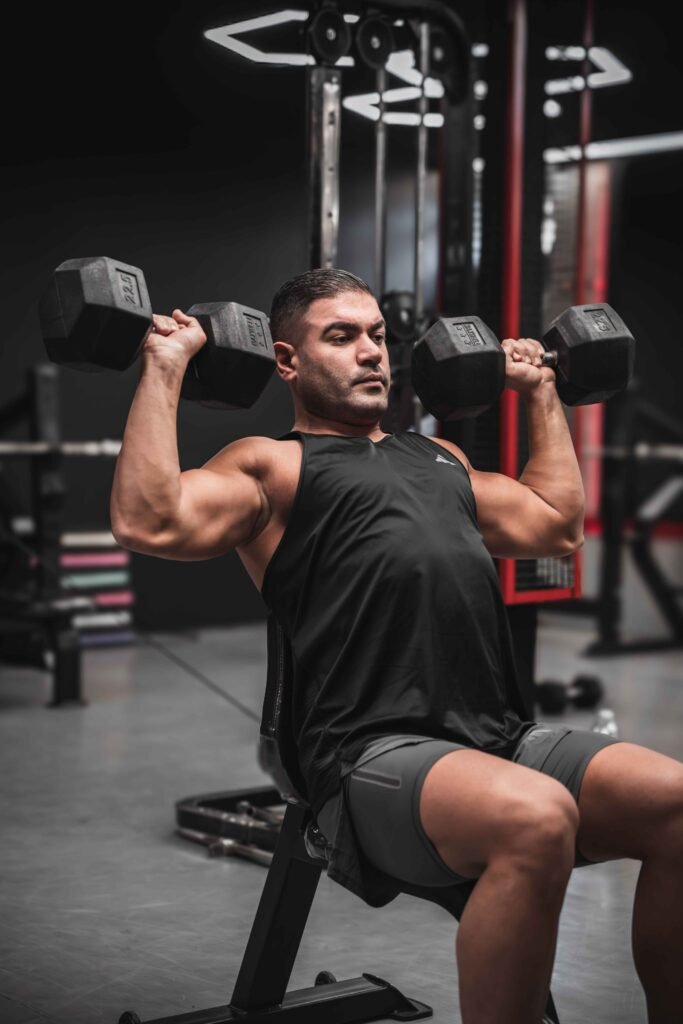
Choose a press, a raise, and a rear-shoulder movement
The deltoid muscle has front, middle, and rear parts. You can work your shoulders by pressing, raising your arms to the side, or moving them from a bent or supported position. No single exercise works just one part of the muscle.
Begin with one press, one type of lateral raise, and one reverse fly. You can add front raises, rows, or shrugs later if you want. Shrugs mainly work the upper trapezius and do not replace deltoid exercises.
| Movement | What changes | Equipment beyond dumbbells |
| Standing shoulder press | Both arms press while standing | None |
| Seated shoulder press | A backrest supports your torso | Stable exercise bench with back support |
| Single-arm shoulder press | One arm works at a time | None |
| Standing lateral raise | Arms travel out toward the sides | None |
| Front raise | Arms travel forward | None |
| Seated lateral raise | Seated position reduces opportunities for leg drive | Stable bench or sturdy armless chair |
| Bent-over reverse fly | You hold a hip hinge while opening the arms | None |
| Chest-supported reverse fly | Bench supports your torso | Adjustable exercise bench |
| Rear-delt row | Elbows bend during a wider rowing movement | None |
| Dumbbell shrug | Shoulder girdle moves upward and down | None |
If you want to include the shoulders as part of a wider session then our full body dumbbell workout incorporates pressing and pulling with some lower body work.
Before you lift
Start with 5-10 minutes of light activity, like walking. Then practice your chosen movements without weights or with very light dumbbells. Your first set with weights should feel like practice, not a test of your strength.
Choose a weight that lets you lower the dumbbells smoothly and finish the set before you need momentum. Breathe throughout: exhale during the lifting effort and inhale as you lower. Mayo Clinic’s weight-training guidance emphasizes appropriate resistance, controlled technique, breathing, recovery, and stopping when an exercise causes pain.
Make sure you have enough space to lower the weights safely. Always check that your bench is set up correctly and avoid using unstable supports. If lifting the weights into position feels harder than the exercise, use lighter weights or ask a trainer for help.
10 shoulder exercises with dumbbells
1. Standing dumbbell shoulder press
Stand with your feet comfortably apart and hold the dumbbells at shoulder height. Palms can be forward or slightly inwards, elbows about in front of the body rather than driven right out to the sides.
Press upwards through a comfortable range, keeping your trunk steady. Lower slowly to the starting position. Don’t use a knee dip to get the weight up or lean back to finish the rep.
Useful cue: Keep your ribs from lifting as the weights rise.
Choose another option if: You cannot find a comfortable overhead path even with light weights. A different pressing exercise may suit you better than forcing this position.
2. Seated dumbbell shoulder press
Sit on a stable exercise bench with the backrest fairly close to upright. Feet planted, bring the dumbbells up to shoulder height in a controlled manner.
Press up, then lower without letting your torso slide forward or your lower back arch further away from the backrest. The support may make it easier to be aware of whether your trunk is moving during the press, but it doesn’t in any way justify a heavier starting weight.
Useful cue: Stay in contact with the backrest while breathing normally.
Watch for: Bouncing the weights at the bottom or struggling to lift them into position before the set begins.
3. Single-arm dumbbell shoulder press
Hold one dumbbell at shoulder height and stand in a comfortable stance. Keep the other arm by your side and relaxed. Press the working arm overhead without leaning away from the weight and then lower it in control.
Complete the planned reps, rest as required and then switch sides. Use the same manageable weight and rep target for both arms rather than adding extra reps to one side to chase fatigue.
Useful cue: Keep your torso facing forward instead of rotating through the lift.
The ACE beginner strength guide includes single arm work as a shoulder press variation. It’s an alternative to the two arm press, not an extra press you have to do as part of the same workout.
4. Standing dumbbell lateral raise
Stand tall with the light dumbbells at either side of your thighs, elbows slightly bent. Raise your arms outwards, a little in front of a straight line to your sides, to either shoulder height or to a lower comfortable point.
Lower slowly without swinging the weights back to start the next rep. Keep your wrists comfortable and don’t deliberately tip the thumbs down as if you’re pouring from a jug.
Useful cue: Let the elbows and upper arms rise together; do not flick the weights upward with your hands.
ACE’s lateral raise instructions are all about a steady torso, a controlled lift and a controlled lower and neutral wrists.
5. Dumbbell front raise
Hold a light dumbbell in each hand in front of your thighs. With your elbows slightly bent, lift the arms forwards to shoulder height then lower smoothly. Keep your torso upright rather than leaning back as you lift the weights.
Use a comfortable hand position, don’t force the wrists into a bend. Start with a smaller range of movement if you can’t manage the full range.
Useful cue: Stop the upward movement before you need to swing or arch.
ACE’s front raise guide is a technique reference. It’s an optional exercise if you’re already doing pressing in your session. It’s not some essential ingredient you have to add just to make the session complete.
6. Seated dumbbell lateral raise
Sit near the front of a stable bench or a sturdy armless chair, feet flat, with some light dumbbells at your side. Raise the arms out through a comfortable range and lower slowly, again using the same basic arm path as the standing raise.
Keep your trunk quiet. Sitting of course removes a lot of the opportunity to use your legs but you can still get some momentum by rocking forwards and backwards.
Useful cue: Keep your chest position consistent from the first repetition to the last.
Choose this rather than the standing lateral raise if you prefer the seated version. You don’t need both variations in the same short routine.
7. Bent-over dumbbell reverse fly
Stand with a slight knee bend and hinge your hips back into a comfortable position. The dumbbells should be hanging directly beneath your shoulders, your back in a steady position and your neck in line with your torso.
With a small consistent elbow bend, raise the arms out. Lower before commencing the next rep. Use a light weight so that you can hold the hinge without your torso actually rising as you lift.
Useful cue: Open the arms without throwing your chest upward.
Watch for: Turning the movement into a row by bending the elbows more and more, or continuing after you can no longer hold the starting position comfortably.
8. Chest-supported dumbbell reverse fly
Set a stable adjustable bench to a moderate incline and sit facing the backrest with your chest supported and your feet on the floor. Let the weights hang below your shoulders.
Raise your arms outwards with your elbows slightly bent, then lower under control. Keep your torso in contact with the support. Don’t force the arms behind your body to create a bigger looking rep.
Useful cue: Let the bench support you; do not lift your chest away from it as the dumbbells rise.
ACE’s incline reverse fly guide calls for a 45-60 degree backrest and a controlled arm movement. That’s an alternative to the standing hinge if you’ve got the appropriate equipment.
9. Dumbbell rear-delt row
Use a light pair and get into a comfortable hip hinge. Let the arms hang and row with the elbows going out a bit rather than right up against your ribs. Keep the wrists under the elbows as the weights rise.
Lower the weights smoothly. Don’t pull the elbows all the way back and don’t lift your torso to finish the rep. The upper back is also involved so it’s not just a rear delts exercise.
Useful cue: Keep the torso angle steady and make the movement through the arms and shoulder blades.
This is a different pulling option to a reverse fly as the elbows are going to bend during the lift. Pick one rear shoulder option rather than trying to pile several similar movements on top of each other.
10. Dumbbell shrug
Stand tall with the dumbbells at either side of your thighs, elbows straight (not rigidly locked). Slight lift of the shoulders, pause and then lower.
Keep your head neutral and don’t roll your shoulders in circles. Select a load that you can lower smoothly without having to shift your torso or bend your arms to assist.
Useful cue: Move up and down rather than making the biggest possible circle.
Shrugs work the upper trapezius around the shoulder girdle. You can treat them as an optional accessory rather than as a replacement for lateral raises or rear shoulder work.
Sets and reps by experience level
Use the table for one press, one lateral raise and one reverse fly. A set is a group of reps followed by rest. For the single arm press the target is per arm so you’ll do both sides before you consider that set complete.
These are just example starting ranges for general training. You don’t have to do every set listed. The pressing and pulling exercises you do will also make up a big part of your weekly workout volume.
| Level | Press | Lateral raise | Reverse fly | Total working sets in this three-move session |
| Learning the movements | 1 × 8–12 | 1 × 10–15 | 1 × 10–15 | 3 |
| Comfortable with the basics | 2 × 8–12 | 2 × 10–15 | 2 × 10–15 | 6 |
| Experienced and recovering well | 2–3 × 8–12 | 2–3 × 10–15 | 2–3 × 10–15 | 6–9 |
Rest for about 90 seconds between sets, and 60 to 90 seconds between raise or fly sets to start. If you need more time to keep your form, take it. End each set when you feel you could still do about two more good reps. You don’t need to push to failure for this session.
If you’re doing single arm exercises, rest between sides if needed. Using a light weight you can control is much better than just swinging through the reps to hit a number.
Add these exercises to your weekly plan
The CDC suggests working all major muscle groups at least twice a week, along with some aerobic activity. Shoulder exercises are just one part of this.
To keep things simple, add your chosen shoulder exercises to two non-consecutive strength sessions. Remember to consider chest presses, rows, and other exercises you already have in your plan. If those sessions already include a lot of upper body work, you might end up doing fewer direct shoulder sets.
Our three day full body split gives us another option as to how we can distribute our pressing, pulling and lower body work. Just work out how much shoulder work you’re already doing and then you can add on a separate shoulder session.
How to progress without losing control
Keep track of the exercise variation, weight, reps, and sets you do. When you can do the highest number of reps in your range with good form over several sessions, try a small weight increase and drop back to fewer reps.
The weight increase between dumbbells can be big for raises. If the next heavier pair makes you swing or shrug, stick with the lighter pair and focus on doing each rep well. You don’t have to increase the weight every week or for every exercise at the same time.
If you only have one fixed pair of dumbbells, they might not work for both presses and raises. Don’t force a lateral raise with too much weight just to use that pair. It’s usually better to use a lighter option, practice the movement without weight, or try a different program.
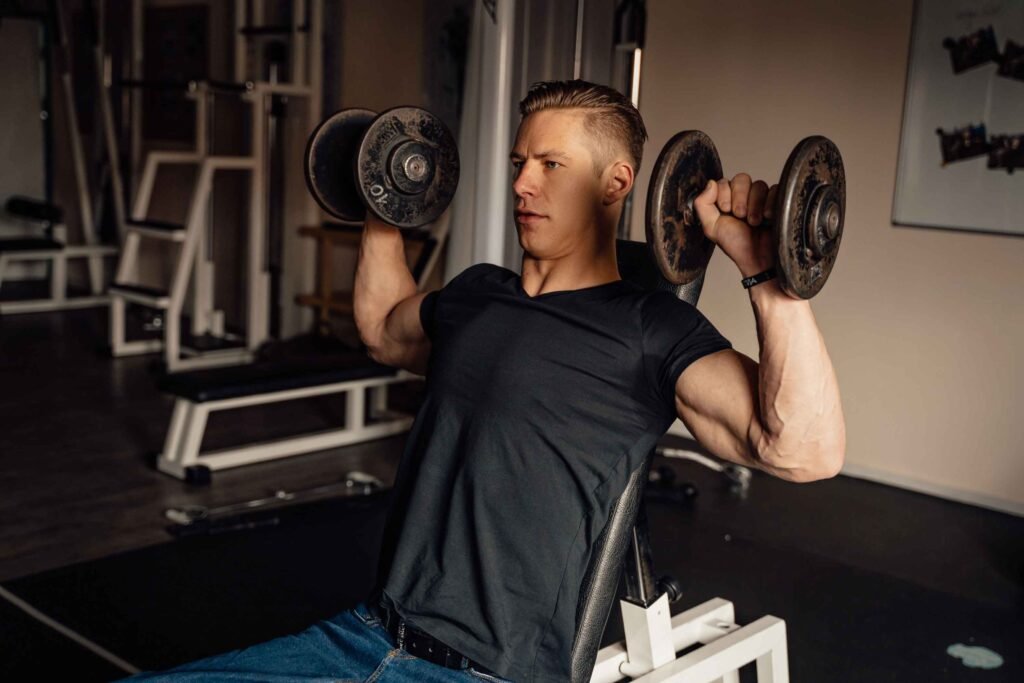
Questions about dumbbell shoulder training
Which three exercises should I do?
Pick a shoulder press, a lateral raise, and a reverse fly that feel comfortable for you. Choose standing or supported versions based on your equipment and how well you can hold your position. Try the new movements first before adding them to your main sets.
Can I train my shoulders at home without a bench?
Yes, you can do the standing press, single arm press, standing lateral raise, front raise, bent over reverse fly, rear delt row, and shrug without a bench. Just make sure you have the right weights and enough space to move safely.
Should I use the same weight for every exercise?
The weight that feels comfortable will usually change depending on the exercise. You’ll probably use much lighter weights for raises and flyes than for presses. Focus on control for each exercise instead of trying to match the weights on your dumbbells.
What if an exercise does hurt?
Stop doing that exercise. Don’t try to push through by increasing your range or using a heavier weight. A good trainer can help you with your technique. If you’re in pain, have an injury, or have any health concerns, see a healthcare professional.
Do I need all ten to build stronger shoulders?
No. Many exercises are just variations of the same movement. It’s easier to track your progress if you stick to a small, repeatable set instead of changing your whole session or adding new exercises every time.
Stick with movements you can do well, write down what you lifted, and only increase the weight when your next set still looks as good as your first.
This is general exercise information, not an individualized training or rehabilitation plan.
Sources
- Mayo Clinic: Weight training—do’s and don’ts of proper technique.
- CDC: Adult Activity—An Overview.
- ACE: Strength Training Workout for Beginners.
- ACE: Lateral Raise.
- ACE: Front Raise.
- ACE: Incline Reverse Fly.

Jen Sheldon is a seasoned writer with a passion for fitness, health, wellness, and addiction treatment. With years of experience crafting insightful and research-backed content, she helps readers navigate their journey toward better well-being. When she’s not writing, you’ll find her exploring new workout routines or diving into the latest health trends.