Now Reading: Anxiety Medicine Ayurvedic: 7 Remedies to Know
-
01
Anxiety Medicine Ayurvedic: 7 Remedies to Know

Anxiety can cause racing thoughts, disrupt your sleep, and make daily life feel more challenging. In addition to standard treatments, some people look for Ayurvedic remedies as a traditional way to support their mental health.
Ayurveda has used herbs, yoga, breathing exercises, massage, and daily routines for hundreds of years. Still, a traditional remedy is not always backed by modern research. Some, like ashwagandha, show promise in studies, but evidence for many others remains limited.

What Is Ayurveda?
Ayurveda is a traditional Indian medical system that looks at both physical and mental health as a whole. It uses diet, herbs, exercise, lifestyle habits, and other therapies.
In Ayurveda, there are three main types, or doshas: Vata, Pitta, and Kapha. Practitioners often use these ideas to guide treatment. However, dosha imbalances are traditional concepts, not recognized medical diagnoses. The National Center for Complementary and Integrative Health (NCCIH) also points out that scientific evidence for Ayurveda is still limited for many health issues.
How Does Ayurveda View Anxiety?
In Ayurveda, feelings like restlessness, worry, trouble sleeping, and feeling unsettled are often linked to an imbalance in the Vata dosha.
Because of this, Ayurvedic approaches for anxiety often include calming routines, warm meals, regular sleep, breathing exercises, meditation, yoga, massage, and herbal remedies.
These practices can help support your well-being, but ongoing anxiety should not be diagnosed or treated based only on dosha types. Anxiety disorders are medical conditions and may need professional care.
7 Ayurvedic Remedies Commonly Used for Anxiety
1. Ashwagandha
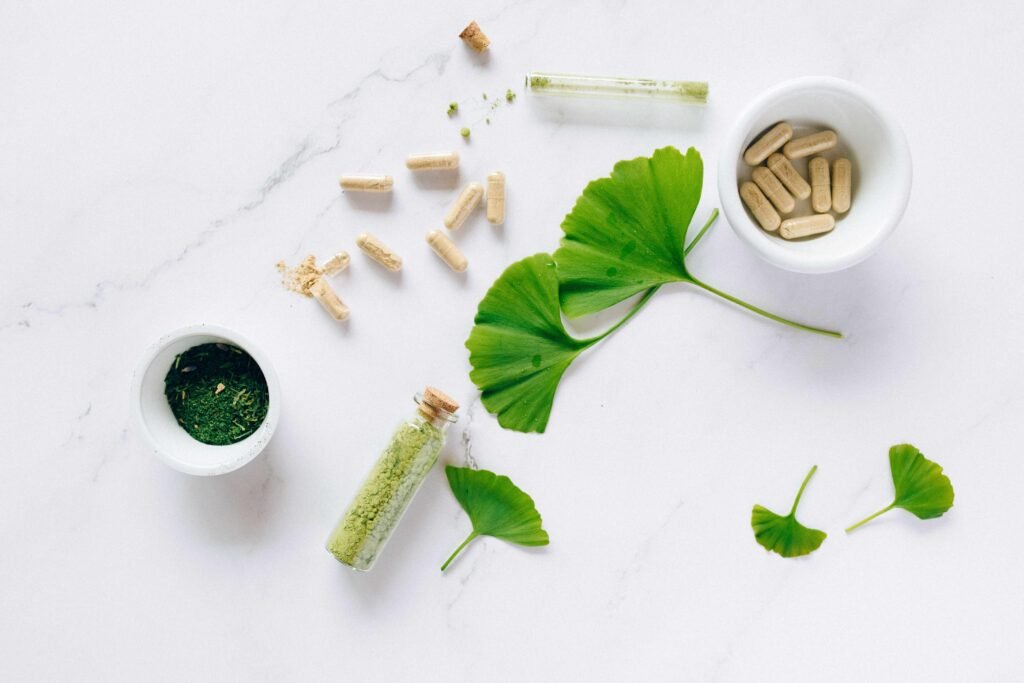
Ashwagandha (Withania somnifera) is likely the most studied herb when it comes to Ayurvedic remedies for anxiety.
A 2024 systematic review and meta-analysis included nine randomized controlled trials with 558 participants. Researchers found improvements in perceived stress and anxiety among people taking ashwagandha compared with placebo. However, the studies used different preparations, and more safety data are needed for long-term use. (PubMed)
A 2026 meta-analysis included 22 studies and reported improvements in stress and anxiety symptoms. Researchers still called for larger, higher-quality trials because the studies varied considerably. (PubMed)
2. Brahmi
Brahmi, usually meaning Bacopa monnieri, has been used in Ayurveda for a long time. Traditionally, it is linked to memory, focus, and mental performance.
However, most modern research on Brahmi looks at its effects on thinking and memory, not on treating anxiety. So, it is better to see Brahmi as a traditional Ayurvedic herb rather than a proven remedy for anxiety.
3. Tulsi
Tulsi, or holy basil, is another herb commonly used in traditional Indian wellness practices.
Some early studies in people have looked at how Tulsi affects stress and mental well-being. Still, there is not enough evidence to say that Tulsi can treat anxiety disorders.
You can include Tulsi in your wellness routine, but it should not replace professional care for anxiety.
4. Jatamansi
Jatamansi has traditionally been included in Ayurvedic preparations intended to promote calmness and sleep.
There is much less clinical evidence for Jatamansi in treating anxiety compared to ashwagandha. Most claims about Jatamansi are based on tradition, animal studies, or lab research, not large studies in people.
5. Shankhpushpi
Shankhpushpi is traditionally associated with memory, concentration, and a calmer state of mind.
One challenge is that Shankhpushpi can mean different plants depending on the region or preparation. There are still few high-quality studies in people to support its use for anxiety.
6. Amla
Amla, also called Indian gooseberry, contains vitamin C and various plant compounds. It can certainly be part of a nutritious diet.
Eating amla and treating anxiety are very different claims. Current clinical evidence does not establish amla as a treatment for anxiety disorders.
7. Chamomile
Chamomile is not exclusively an Ayurvedic herb, but it commonly appears in natural approaches to relaxation.
Unlike many traditional herbs, chamomile has undergone some human research for anxiety. Still, research remains insufficient to consider chamomile a replacement for established anxiety treatment.
Does Ashwagandha Really Help Anxiety?
Ashwagandha deserves extra attention because it has stronger human evidence than many herbs marketed for anxiety.
A 2022 systematic review analyzed 12 randomized trials involving 1,002 participants. Ashwagandha supplementation was linked to lower anxiety and stress scores compared with placebo. Researchers rated the certainty of evidence as low because studies differed substantially. (PubMed)
NCCIH takes a similarly cautious position. It states that some ashwagandha preparations may help with stress and insomnia, but evidence regarding anxiety remains unclear. (NCCIH)
So, promising evidence does not yet make ashwagandha a proven replacement for standard anxiety treatment.
Ayurvedic Practices for Anxiety Beyond Herbs
An Ayurvedic anxiety medicine routine does not have to revolve around supplements. Ayurveda also includes practices such as yoga, meditation, and controlled breathing.
Yoga and Meditation
Gentle yoga combines physical movement with breathing and focused attention. Meditation can also help you slow down and become more aware of thoughts without immediately reacting to them.
These practices can form part of a broader anxiety-management plan alongside appropriate professional treatment.
Diaphragmatic Breathing
Try sitting comfortably and breathing slowly through your nose while allowing your abdomen to expand. Exhale slowly and repeat for several minutes.
Slow breathing is a simple relaxation practice when you feel tense or overwhelmed.
What About Shirodhara and Ayurvedic Massage?
Traditional Ayurvedic treatments also include Abhyanga, a form of oil massage, and Shirodhara, in which liquid is poured slowly over the forehead.
Some people find massage and similar wellness practices relaxing. However, evidence does not support Shirodhara, Abhyanga, or Nasya as established medical treatments for anxiety.
Use them as complementary wellness practices, not substitutes for mental healthcare.
Is Ayurvedic Medicine Safe for Anxiety?
Natural does not always mean safe.
NCCIH warns that some Ayurvedic preparations may contain potentially toxic amounts of lead, mercury, or arsenic. It reports that a 2015 survey found elevated blood lead levels in 40% of Ayurvedic-product users studied, while some participants also had elevated mercury levels. (NCCIH)
Choose products carefully and discuss herbal supplements with a healthcare professional, especially if you take prescription medications.
Who Should Be Careful With Ashwagandha?
Ashwagandha can cause stomach upset, diarrhea, vomiting, and drowsiness. Rare cases of liver injury have also been linked to ashwagandha supplements.
According to NCCIH, pregnant or breastfeeding people should avoid it. It may also be unsuitable for those with thyroid or autoimmune disorders or preparing for surgery.
Ashwagandha can interact with thyroid medicines, sedatives, anticonvulsants, immunosuppressants, and some diabetes and blood pressure medications.
Ayurvedic Remedies vs. Anxiety Treatment
If you have an anxiety disorder, do not replace prescribed treatment with an anxiety medicine ayurvedic product without consulting your healthcare provider.
The National Institute of Mental Health explains that generalized anxiety disorder is typically treated with psychotherapy, medication, or both. Cognitive behavioral therapy, or CBT, is a well-studied psychotherapy for GAD.
Doctors may also prescribe medicines such as SSRIs or SNRIs when appropriate.
Ayurvedic practices can complement conventional care for some people, but you should not stop prescribed anxiety medication suddenly to switch to herbs.
Simple Daily Routine for Managing Anxiety
Start your morning with a consistent waking time and a few minutes of slow breathing. Eat regular, balanced meals and include some physical activity during your day.
In the evening, reduce stimulating screen use, try gentle stretching or yoga, and give yourself time to unwind before bed.
These simple habits may be more sustainable than relying solely on an anxiety medicine ayurvedic supplement.
Frequently Asked Questions
What Is the Best Anxiety Medicine Ayurvedic Option?
There is no single Ayurvedic medicine proven to be the best treatment for anxiety. Ashwagandha has some promising human research, but evidence is still developing.
Does Ashwagandha Reduce Anxiety?
Several clinical trials and systematic reviews report improvements in anxiety or stress measures. However, study sizes, products, and doses vary, so more high-quality research is necessary.
Does Brahmi Help With Anxiety?
Brahmi has a long history in Ayurveda, but modern evidence focuses more strongly on cognitive outcomes. Evidence for treating clinical anxiety remains limited.
Can Ayurveda Cure Anxiety Permanently?
No Ayurvedic herb or treatment has been shown to permanently cure anxiety. Anxiety disorders can often be managed effectively with appropriate treatment and lifestyle support.
Can I Take Ayurvedic Herbs With Anxiety Medication?
Do not assume they are safe together. Herbs can interact with prescription medications, so consult your doctor or pharmacist before combining them.
Final Thoughts
Searching for anxiety medicine ayurvedic options can introduce you to traditional herbs and calming practices, but evidence varies greatly between treatments. Ashwagandha has promising research, while evidence for Brahmi, Tulsi, Jatamansi, and Shankhpushpi remains limited.
Use an anxiety medicine ayurvedic approach as complementary support, not a replacement for proven mental healthcare. Safe products, realistic expectations, healthy daily habits, and professional guidance offer a balanced approach.
Helpful YouTube Resource
Here’s a helpful video by Erik Richardson D.O. :
References
1. NCCIH — Ayurvedic Medicine: In Depth
Overview of Ayurveda, current scientific evidence, and important safety concerns surrounding some Ayurvedic products.
https://www.nccih.nih.gov/health/ayurvedic-medicine-in-depth
2. NCCIH — Ashwagandha: Usefulness and Safety
Evidence on ashwagandha for stress and anxiety, along with side effects, medication interactions, pregnancy concerns, and other safety information.
https://www.nccih.nih.gov/health/ashwagandha
3. Arumugam V, et al. Effects of Ashwagandha on Stress and Anxiety: Systematic Review and Meta-Analysis.
Nine randomized controlled trials involving 558 participants were included.
https://pubmed.ncbi.nlm.nih.gov/39348746/
4. Akhgarjand C, et al. Ashwagandha Supplementation for Anxiety and Stress.
Systematic review and meta-analysis of 12 randomized trials involving 1,002 participants.
https://pubmed.ncbi.nlm.nih.gov/36017529/
5. Alsanie SA, et al. Effects of Ashwagandha on Mental Health in Adults.
A 2026 systematic review and meta-analysis incorporating 22 studies examining stress, anxiety, and other mental-health outcomes.
https://pubmed.ncbi.nlm.nih.gov/41644067/
6. National Institute of Mental Health — Generalized Anxiety Disorder.
Information about anxiety symptoms and established treatments, including psychotherapy and medication.
https://www.nimh.nih.gov/health/publications/generalized-anxiety-disorder-gad

Jen Sheldon is a seasoned writer with a passion for fitness, health, wellness, and addiction treatment. With years of experience crafting insightful and research-backed content, she helps readers navigate their journey toward better well-being. When she’s not writing, you’ll find her exploring new workout routines or diving into the latest health trends.